Quick answer
Runner’s knee commonly refers to pain around or behind the kneecap that is aggravated by running, stairs, squats or prolonged sitting. Physiotherapy typically combines training-load changes, strength work and a gradual return-to-running plan.
Common signs
- Pain around or behind the kneecap during running
- Discomfort on stairs, squats or after prolonged sitting
- Symptoms after a recent increase in distance, hills or speed
How physiotherapy may help
A physiotherapist can assess running and movement demands, identify strength or load factors, and build a progressive plan that supports your return to running.
Runner’s Knee: Understanding Patellofemoral Joint Pain & Recovery
- Pain at the front of the knee.
- Discomfort when climbing stairs.
- A dull ache after sitting for long periods.
- Pain during squats or downhill walking.
These are classic signs of Runner’s Knee, medically referred to as Patellofemoral Joint Pain.
Despite the name, this condition affects:
•Runners
•Cyclists
•Gym-goers
•Office workers
•Students
•Anyone who loads their knee repeatedly
It is one of the most common causes of anterior (front) knee pain.
The good news?
It is highly manageable with proper physiotherapy.
What Is Runner’s Knee?
Runner’s Knee refers to pain originating from the patellofemoral joint — the joint between the kneecap (patella) and the thigh bone (femur).
When you bend your knee:
•The patella glides within a groove on the femur.
•Forces increase significantly during squats, stairs, and running.
•If tracking is altered or load exceeds tolerance, irritation develops.
This irritation causes Patellofemoral Joint Pain. It is not usually a structural tear. It is a load-distribution problem.
Why Is It Called Patellofemoral Joint Pain?
Because the pain comes from stress at the contact surface between:
•The back of the kneecap
•The groove of the femur
When pressure increases beyond what the joint can tolerate, pain signals are triggered. The cartilage may be irritated, but often the issue is mechanical overload rather than permanent damage. Pain does not automatically mean degeneration.
Who Gets Runner’s Knee?
It commonly affects:
•Recreational runners
•Teen athletes
•Gym beginners
•Individuals increasing training volume
•Office workers with weak hip muscles
•People who sit for long hours
•Individuals with flat feet or poor mechanics
In Singapore, we frequently see this in:
•Weekend runners
•National service trainees
•Students involved in sports
•Corporate professionals restarting exercise
It often appears when activity increases suddenly.
What Causes Patellofemoral Joint Pain?
Runner’s Knee is usually multifactorial.
Common contributors include:
•Weak quadriceps
•Weak glute muscles
•Poor hip control
•Overpronation (flat feet)
•Tight hamstrings
•Tight calf muscles
•Limited ankle mobility
•Sudden mileage increase
•Downhill running
•Poor squat mechanics
•Prolonged sitting
The knee sits between the hip and ankle. If either of those joints lacks control, the knee compensates. And compensation increases stress.
Symptoms of Runner’s Knee
•Pain at the front of the knee
•Dull ache behind or around the kneecap
•Pain climbing or descending stairs
•Pain when squatting
•Discomfort after sitting long periods (“movie-goer’s knee”)
•Pain during downhill walking
•Mild swelling
•Clicking or grinding sensation
Pain is usually diffuse rather than pinpoint.
It often worsens with repetitive bending.
Why Stairs and Squats Hurt
When climbing stairs:
•Patellofemoral joint forces increase up to 3–4 times body weight.
During squats:
•Joint stress can reach 7–8 times body weight.
If alignment is suboptimal, pressure concentrates unevenly.
The joint becomes irritated.
Load + poor control = pain.
Is It Cartilage Damage? Not always.
Some patients worry about “cartilage wearing out.”
However:
•Many people with cartilage changes have no pain.
•Many people with pain have minimal structural damage.
Pain is influenced by mechanics, load, strength, and nervous system sensitivity.
Proper rehab often reduces symptoms significantly.
The Role of Hip Strength
Weak glute muscles allow the knee to collapse inward during movement. This increases patellofemoral joint stress. Strengthening the hip reduces knee strain. The knee often suffers for the hip’s weakness.
Physiotherapy Treatment for Runner’s Knee
At PhysioFriend, we focus on correcting mechanical contributors.
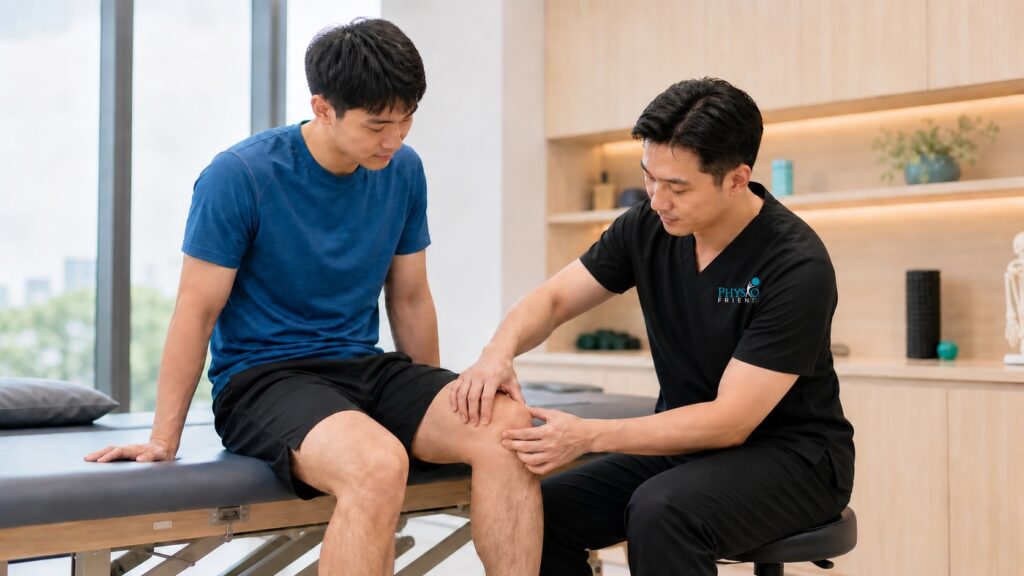
1. Comprehensive Assessment
We assess:
•Patella tracking
•Quadriceps strength
•Hip strength
•Ankle mobility
•Foot posture
•Running mechanics
•Squat pattern
•Load history
We identify why the joint is overloaded.
2. Pain Management & Load Modification
We adjust aggravating activities:
•Reduce running mileage
•Modify squat depth
•Avoid excessive downhill running
•Adjust training intensity
We don’t eliminate activity — we manage it.
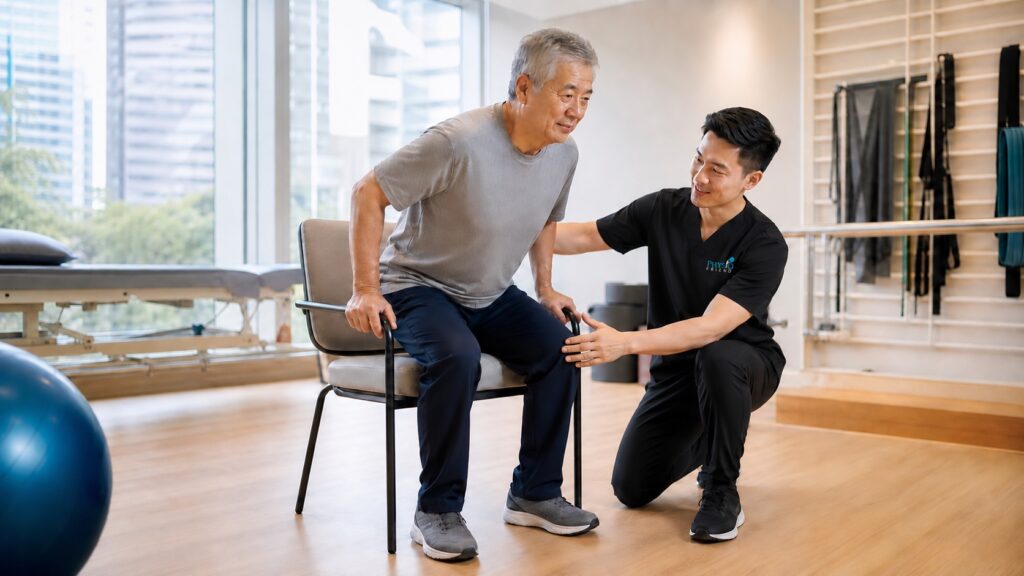
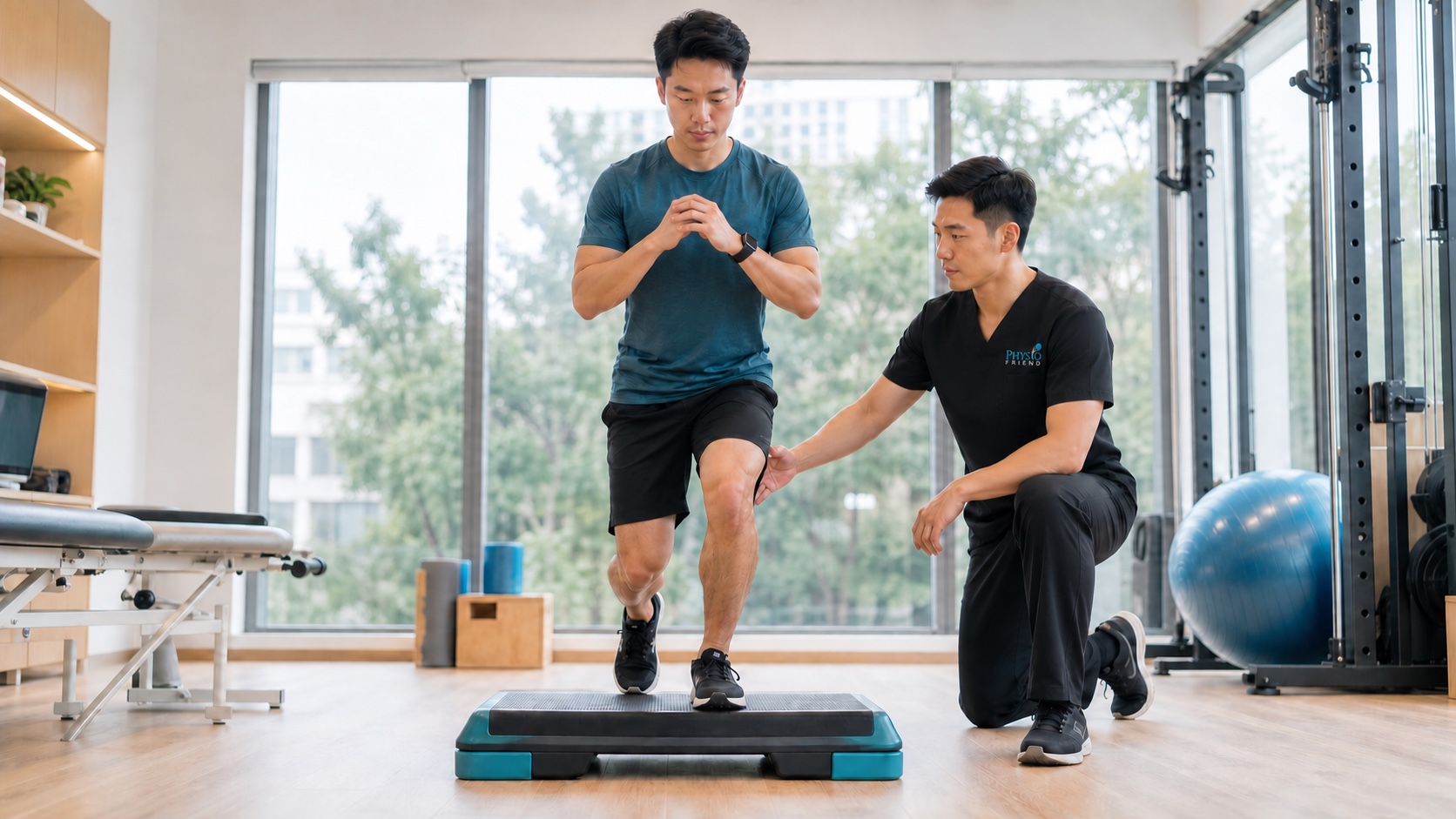
3. Strengthening Programme
The foundation of recovery includes:
•Quadriceps strengthening
•Glute strengthening
•Hip abductor training
•Core stability work
•Step-down control drills
•Functional movement retraining
Strong hips improve knee alignment.
4. Patella Taping
Temporary taping may:
•Improve alignment
•Reduce pain
•Increase confidence in movement
It is supportive — not a permanent solution.
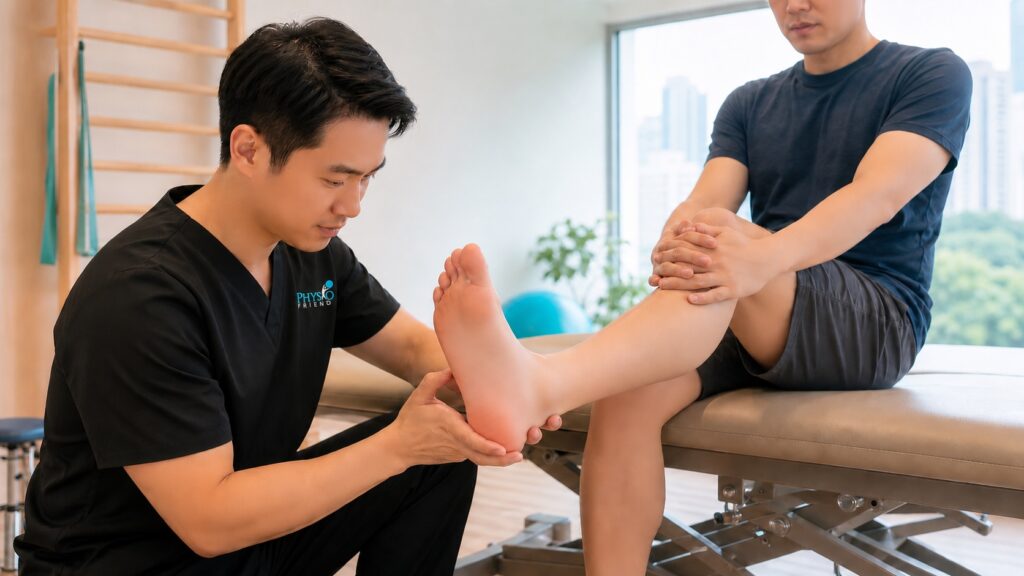
5. Ankle & Foot Mechanics
Improving ankle dorsiflexion reduces knee stress.
Addressing flat feet or excessive pronation may also help.
6. Return-to-Running Programme
For runners, gradual reintroduction is critical.
We guide:
•Cadence adjustments
•Mileage progression
•Surface selection
•Load monitoring
Skipping progression risks recurrence.
How Long Does Recovery Take?
Most cases improve with consistent rehab.
Mild cases: 4–6 weeks
Moderate cases: 6–12 weeks
Chronic cases: several months
Progress depends on:
•Strength gains
•Load management
•Consistency
•Movement quality
The knee rewards patience.
Common Mistakes
•Continuing high mileage despite pain
•Only stretching without strengthening
•Ignoring hip weakness
•Jumping back into full activity too quickly
•Relying only on knee braces
•Avoiding movement entirely
Avoiding load weakens the system.
Smart loading strengthens it.
Can Runner’s Knee Become Chronic?
Yes — if untreated.
Persistent pain may develop due to:
•Muscle imbalance
•Fear of movement
•Reduced activity tolerance
•Incomplete rehabilitation
Early intervention improves long-term outcomes.
Prevention Strategies
To prevent recurrence:
•Strengthen glutes regularly
•Maintain quadriceps strength
•Increase mileage gradually
•Avoid sudden training spikes
•Improve landing mechanics
•Monitor pain levels
•Rest strategically
Consistency builds resilience.
When Should You See a Physiotherapist?
Seek assessment if:
•Front knee pain lasts more than 2 weeks
•Stairs become uncomfortable
•Sitting causes aching
•Running aggravates symptoms
•Pain keeps returning
•Performance declines
Early physiotherapy prevents chronic patterns.
Why Choose PhysioFriend in Singapore?
At PhysioFriend, we:
•Provide accurate diagnosis of Patellofemoral Joint Pain
•Focus on biomechanical correction
•Deliver structured strengthening programmes
•Guide safe return to running
•Address hip–knee–ankle interaction
•Promote long-term resilience
We don’t just treat symptoms.
We fix the movement pattern.
Final Thoughts
Runner’s Knee, or Patellofemoral Joint Pain, is a load-related mechanical condition.
It is highly responsive to:
•Strengthening
•Load management
•Biomechanical correction
•Progressive rehabilitation
The patellofemoral joint is built to handle force but it requires proper alignment and muscular support.
With structured physiotherapy, most individuals return to full activity without surgery.
The knee doesn’t need less movement.
It needs better movement.
Frequently asked questions
Can I continue running with runner’s knee?
Often, running can be modified rather than stopped completely. Distance, speed, hills and frequency may need temporary adjustment according to symptom response.
What causes runner’s knee?
It is usually influenced by several factors, including a sudden change in training load, tissue capacity, strength, recovery and individual movement patterns.
Which exercises help runner’s knee?
Hip and knee strengthening is commonly used, alongside exercises matched to your running demands. An assessment helps determine the most relevant progression.
When should running-related knee pain be assessed?
Seek assessment if symptoms persist or worsen, and prompt care after significant trauma, marked swelling, locking or an inability to bear weight.