
Rotator Cuff Physiotherapy Singapore | Physio Friend
What Is Classified as Rotator Cuff?
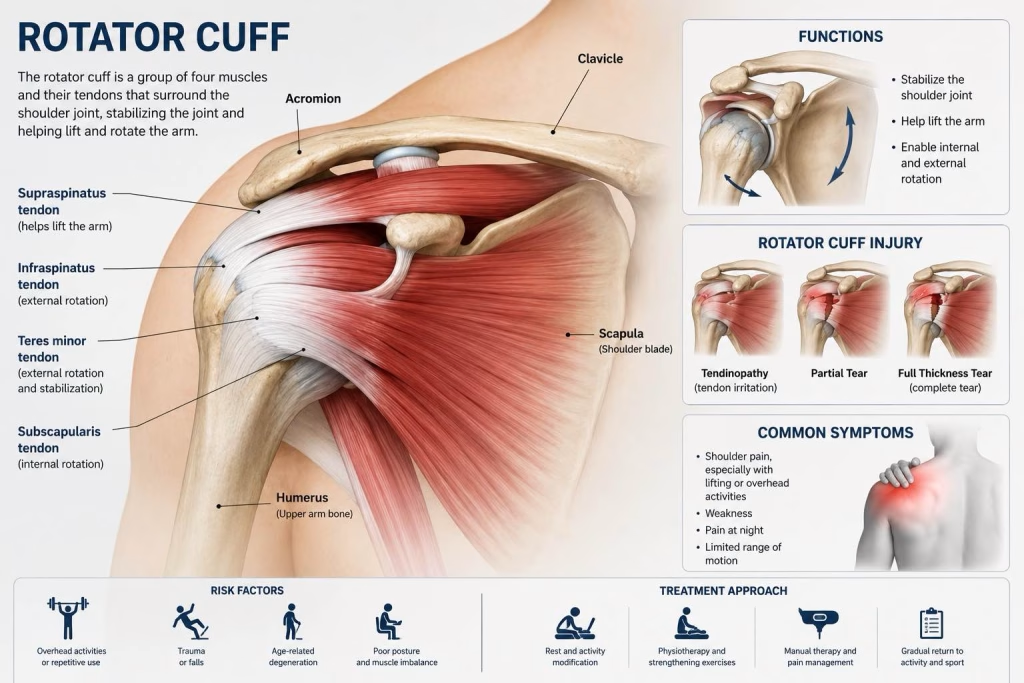
The rotator cuff is a group of four muscles and their tendons — supraspinatus, infraspinatus, teres minor, and subscapularis — that surround the shoulder joint. Together they stabilise the head of the humerus in the glenoid socket and control fine shoulder movement. Injuries range from mild strains and tendinopathy through to partial and full thickness tears.
Common Causes for Rotator Cuff
- Repetitive overhead activity such as painting, swimming, throwing, or overhead pressing
- Sudden force or falling on an outstretched arm or catching a heavy object
- Age-related degeneration — tendon blood supply reduces with age, increasing tear vulnerability
- Poor scapular control, weakness of the shoulder blade stabilisers increases rotator cuff load
- Previous shoulder injury particularly if not fully rehabilitated
Symptoms for whiplash
- Pain on the outer or front of the shoulder worse with overhead reaching or behind-the-back movements
- Weakness when lifting the arm or rotating the shoulder
- Night pain, often worse when lying on the affected shoulder
- A clicking, catching, or grinding sensation with shoulder movement
- Reduced range of motion particularly overhead and behind the back
The Physio Friend Approach
At Physio Friend, rotator cuff assessment includes thorough analysis of shoulder movement quality, muscle strength, scapular control, and the specific demands of your work or sport. We do not apply a generic shoulder protocol, we identify which muscles are affected, at what stage the injury is, and what your specific goals are.
Treatments We Use
- Progressive rotator cuff strengthening — targeting the affected tendons and muscles specifically
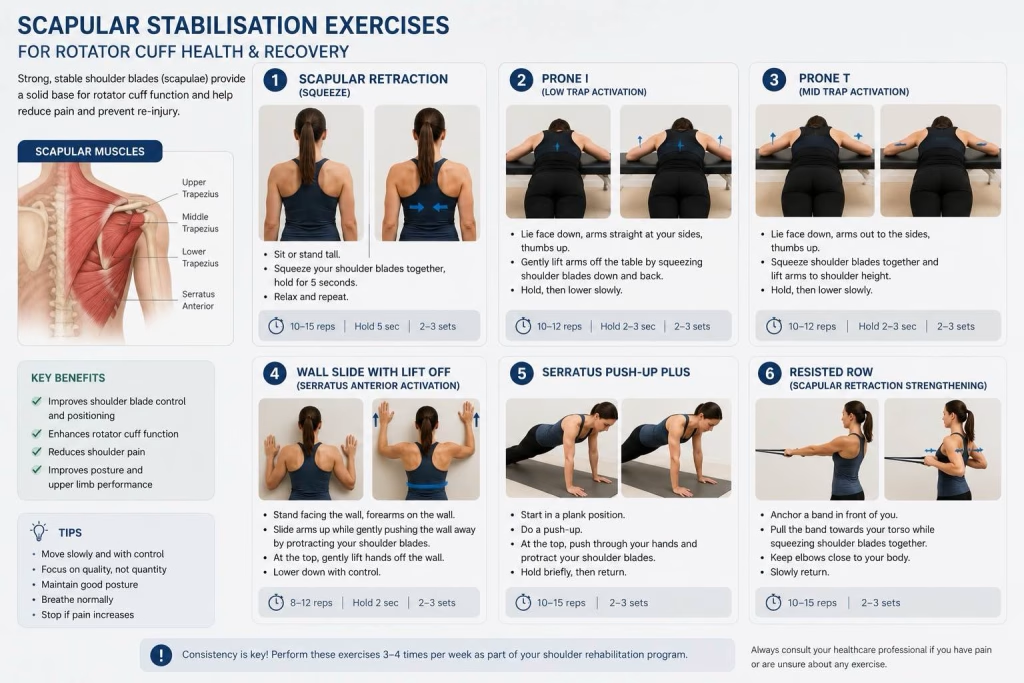
- Scapular stabilisation exercises — rebuilding the foundational control that protects the cuff
- Manual therapy — glenohumeral and scapulothoracic joint mobilisation
- TR-Therapy — for tendon healing and pain management
- Dry needling — for associated trigger points in the infraspinatus and surrounding muscles
- Taping — offloading the rotator cuff during activity while strength is rebuilt
Still in pain?
Our physiotherapists in Tampines and Yishun are ready to help. No referral needed!

Frequently
Asked Questions
Partial tears and tendinopathy almost always heal well with physiotherapy. Full thickness tears can also be managed conservatively in many cases. Surgery is generally reserved for large tears with significant functional loss that have not responded to physiotherapy.
Mild tendinopathy: 6–8 weeks. Partial tears: 10–16 weeks. Full tears managed conservatively: 4–6 months. Post-surgical repair: 4–6 months.
Not necessarily. Your physiotherapist will advise on which exercises are safe to continue and which to avoid based on your specific injury.
Not always. Many rotator cuff injuries are accurately assessed clinically. MRI is most useful when the diagnosis is unclear or when surgical planning is being considered.