
Understanding Jumper’s Knee and Its Causes
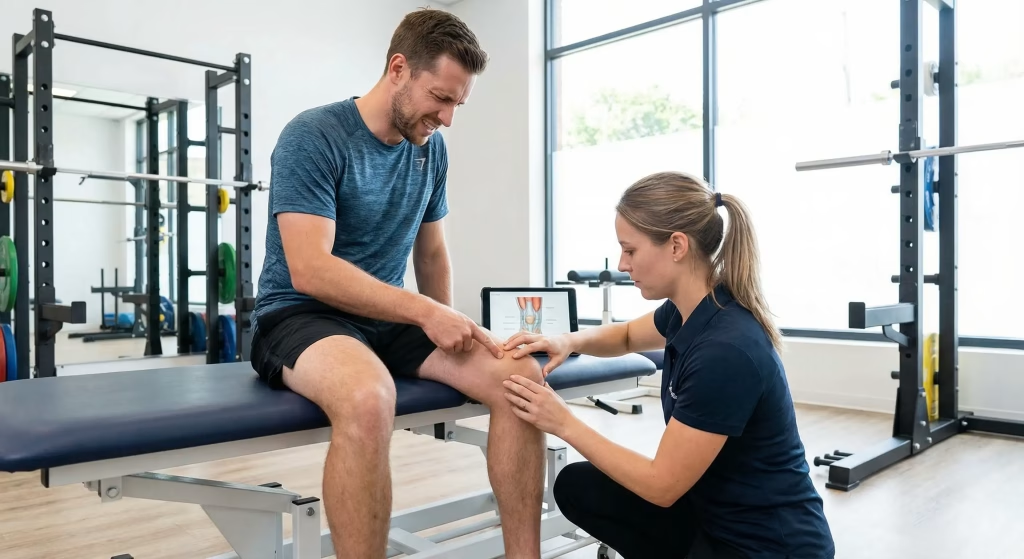
Many individuals seek Jumper’s Knee treatment when they experience pain at the front of the knee, tenderness below the kneecap, or discomfort during activities such as jumping, squatting, and climbing stairs. Known medically as Patellar Tendinopathy, this condition involves irritation and degeneration of the patellar tendon, which connects the kneecap to the shinbone. This tendon plays a crucial role in transferring force from the quadriceps muscle to straighten the knee. Every motion like jumping, landing, sprinting, and squatting places stress on this tendon. Overloading leads to micro-damage accumulation, marking the onset of the condition.
Though often mistaken for “tendonitis,” Jumper’s Knee is more about tendon degeneration rather than just inflammation. It involves collagen fiber breakdown, tendon thickening, and reduced elasticity. Anti-inflammatory medications usually fail to address this issue, as the tendon requires progressive loading to rebuild its capacity effectively.
Who is Affected by Jumper’s Knee?
Jumper’s Knee usually affects athletes across various sports, including volleyball, basketball, and football. Additionally, runners, CrossFit athletes, and regular gym enthusiasts also experience this condition. Importantly, it is not limited to professional athletes; individuals who increase their activity levels suddenly, such as office workers embarking on intense workout regimens, are at risk as well. Key risk factors include rapid increments in training volume, poor landing mechanics, and weaknesses in muscle groups like quadriceps and glutes.
Symptoms and Diagnosis of Jumper’s Knee
Typical symptoms of the condition include pain just below the kneecap, tenderness in the patellar tendon, discomfort during movements such as jumping or squatting, and stiffness after rest. Notably, symptoms tend to improve after warming up but often return post-activity. Accurate diagnosis often involves assessing pain location, tendon thickness, and any biomechanical issues.
Effective Jumper’s Knee Treatment Options
Jumper’s Knee treatment involves a multi-faceted approach aimed at managing tendon load appropriately. Physiotherapy emphasizes restoring tendon capacity through carefully planned progressive loading. Key stages in treatment include:
Comprehensive Assessment: This involves evaluating pain, tendon condition, and any contributing biomechanical factors.
Load Modification: Aggravating activities are temporarily reduced. Instead of complete rest, activities such as jumping are minimized.
Isometric Exercises: These help reduce tendon pain, allowing continued training without aggravation.
Heavy Slow Resistance Training: Critical for recovery, this involves controlled strengthening exercises that promote tendon adaptation.
Hip and Core Strengthening: Weakness in these areas can exacerbate knee stress, necessitating targeted strengthening exercises.
Landing Mechanics Training: Retraining proper knee alignment and jump symmetry is essential to alleviate excessive tendon strain.
Return-to-Sport Progression: A gradual reintroduction to full activity levels is crucial to avoid recurrence.
Prevention Tips and Long-term Management
To prevent the recurrence of Jumper’s Knee, individuals should focus on gradual training progression and strength maintenance. Monitoring jump volume, avoiding sudden load increases, and ensuring adequate recovery time are critical preventive measures. Engagement in cross-training, utilizing proper footwear, and addressing landing mechanics further help in long-term management.
Consulting with a physiotherapist is recommended if knee pain persists beyond two weeks or if activities like jumping and climbing stairs become increasingly painful. Early intervention is key to preventing progression and ensuring a safe return to regular activities.
For those in Singapore, places like PhysioFriend offer specialized Jumper’s Knee treatment, focusing on accurate diagnosis and customised rehabilitation plans for both athletes and non-athletes alike. Addressing not just the symptoms but enhancing tendon resilience is paramount for effective long-term recovery.