
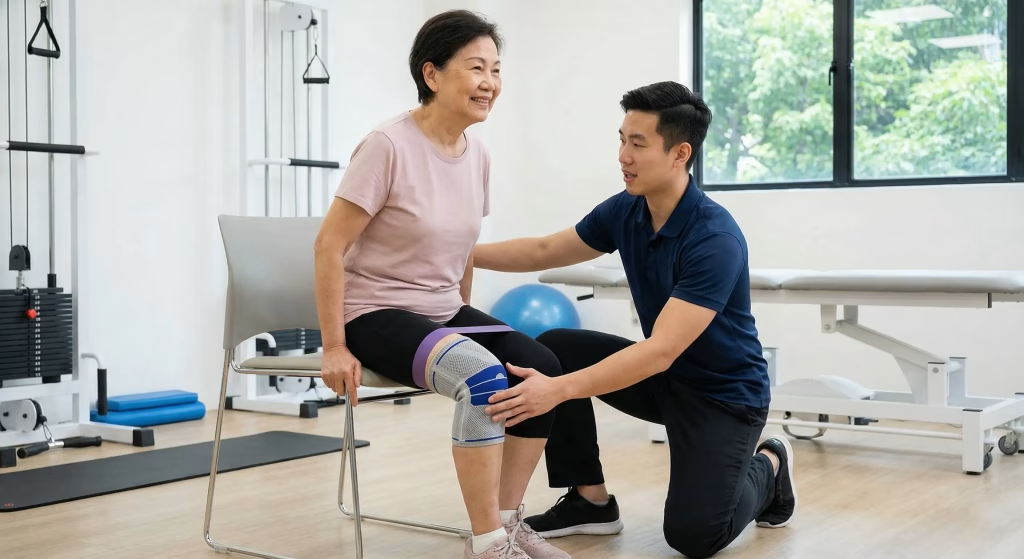
Knee Osteoarthritis: Understanding Joint Degeneration & How Physiotherapy Helps
- Knee pain that worsens with walking.
- Stiffness in the morning.
- Difficulty climbing stairs.
- A grinding sensation when bending.
These are common signs of Knee Osteoarthritis.
Osteoarthritis is often described as “wear and tear,” but that phrase oversimplifies what is actually a complex, active biological process.
It is not simply a joint “wearing out.”
It is a joint adapting sometimes poorly to stress over time.
The good news?
Knee Osteoarthritis can be managed effectively with the right physiotherapy approach, allowing many individuals to remain active without surgery.
Let’s break it down properly.
What Is Knee Osteoarthritis?
Knee Osteoarthritis is a degenerative joint condition that affects the cartilage, bone, and surrounding soft tissues of the knee. Cartilage is the smooth, shock-absorbing tissue that covers the ends of bones inside the joint.
In osteoarthritis:
•Cartilage gradually thins
•Joint space narrows
•Bone changes occur
•Mild inflammation develops
•Joint mechanics become altered
The process is gradual and progressive but manageable.
Is It Just “Wear and Tear”?
That phrase makes it sound inevitable and irreversible.
In reality, osteoarthritis involves:
•Biomechanical stress
•Low-grade inflammation
•Muscle weakness
•Reduced joint lubrication
•Reduced shock absorption
•Altered movement patterns
Cartilage does not have its own blood supply. It relies on movement to receive nutrients.
Movement done correctly helps nourish the joint.
Avoiding movement completely often worsens stiffness.
Who is at Risk?
Risk factors include:
•Age (especially above 50)
•Previous knee injury
•Meniscus damage
•Ligament injury
•Obesity
•Repetitive high-load occupations
•Family history
•Muscle weakness
•Sedentary lifestyle
In Singapore, prolonged standing jobs and aging populations contribute significantly.
Interestingly, inactivity also increases risk.
The knee likes intelligent loading.
Symptoms of Knee Osteoarthritis
Common symptoms include:
•Knee pain during walking
•Stiffness after rest
•Reduced range of motion
•Swelling
•Grinding sensation (crepitus)
•Difficulty climbing stairs
•Pain when squatting
•Instability feeling
•Reduced endurance
Pain typically worsens with activity and improves with rest but advanced cases may have persistent discomfort.
Morning stiffness usually lasts less than 30 minutes.
What Happens Inside the Joint?
In Knee Osteoarthritis:
1.Cartilage softens and thins.
2.The body attempts repair.
3.Bone beneath cartilage thickens.
4.Joint capsule may tighten.
5.Synovial fluid changes.
6.Muscles around the knee weaken.
The knee becomes less efficient at shock absorption.
Weak quadriceps muscles further increase joint stress.
It becomes a cycle.
Weakness → more joint load → more irritation → less movement → more weakness.
Breaking this cycle is essential.
Is Imaging Necessary?
X-rays often show joint space narrowing and bone changes.
However:
•Some people have severe X-ray changes but minimal pain.
•Others have mild changes but significant discomfort.
Pain does not always correlate with imaging severity.
Clinical assessment matters more than imaging alone.
Can Knee Osteoarthritis Be Cured?
There is currently no way to fully reverse cartilage degeneration.
However:
•Symptoms can be significantly reduced
•Function can be improved
•Progression can be slowed
•Surgery can often be delayed or avoided
Management is powerful.
Osteoarthritis is not a sentence to inactivity.
Why Exercise Is the Most Important Treatment
Research consistently shows that structured exercise is the most effective conservative treatment for Knee Osteoarthritis.
Exercise helps:
•Strengthen quadriceps
•Improve joint stability
•Reduce pain sensitivity
•Improve circulation
•Maintain cartilage nutrition
•Enhance balance
•Improve confidence in movement
Avoiding activity worsens joint stiffness.
Motion nourishes joints.
Physiotherapy Treatment for Knee Osteoarthritis
At PhysioFriend, we focus on improving joint function and load tolerance.
1. Detailed Assessment
We evaluate:
•Range of motion
•Swelling
•Muscle strength
•Gait pattern
•Alignment (varus/valgus knees)
•Balance
•Functional movement
•Activity limitations
Understanding mechanical contributors guides treatment.
2. Strengthening Program
Quadriceps strengthening is critical.
Exercises may include:
•Sit-to-stand training
•Leg press
•Step-ups
•Controlled squats
•Hamstring strengthening
•Glute strengthening
Strong hips reduce knee load.
Strength changes joint stress distribution.
3. Range of Motion Exercises
Maintaining extension and flexion prevents stiffness progression.
Gentle mobilisation techniques may help restore movement.
4. Weight Management Support
Even small weight reduction reduces knee load significantly.
Every extra kilogram increases joint stress multiple times during walking.
5. Pain Modulation Techniques
Manual therapy, taping, and education help reduce flare-ups.
Pain reduction improves exercise participation.
6. Activity Modification
We help patients adjust:
•Stair climbing technique
•Walking duration
•Exercise intensity
•Daily load exposure
Smart modification prevents flare-ups.
The Role of Alignment
Knee alignment affects load distribution.
•Varus alignment (“bow legs”) increases medial compartment load.
•Valgus alignment (“knock knees”) increases lateral compartment load.
Targeted strengthening can partially compensate for mechanical stress patterns.
Can You Still Exercise With Knee Osteoarthritis?
Yes and you should.
Safe options include:
•Swimming
•Cycling
•Elliptical training
•Strength training
•Controlled walking programs
High-impact activities may need modification.
Avoiding movement entirely worsens outcomes.
When Is Surgery Necessary?
Knee replacement is considered when:
•Pain is severe and persistent
•Conservative management fails
•Daily function is severely limited
•Sleep is affected
However, many patients manage symptoms effectively without surgery for years.
Physiotherapy often delays or eliminates the need for surgery.
Flare-Ups: What Causes Them?
Flare ups may occur due to:
•Sudden activity increase
•Weather changes (subjective effect)
•Inadequate muscle strength
•Poor load management
•Weight gain
•Reduced mobility
Flare-ups are common and manageable.
They do not necessarily mean worsening degeneration.
The Psychological Component
Chronic knee pain affects confidence.
Fear of movement leads to:
•Reduced activity
•Muscle loss
•Increased stiffness
•Greater disability
Education reduces fear.
Movement restores control.
Control reduces pain perception.
Long-Term Management Strategy
Managing Knee Osteoarthritis requires:
•Consistent strengthening
•Regular movement
•Load monitoring
•Weight management
•Ongoing activity participation
•Avoiding prolonged inactivity
This is a marathon, not a sprint.
Consistency beats intensity.
When Should You See a Physiotherapist?
Seek assessment if:
•Knee pain persists beyond a few weeks
•Stairs become difficult
•Stiffness worsens
•Walking distance decreases
•Swelling increases
•You want to delay surgery
•You’ve reduced activity due to pain
Early intervention improves long-term outcomes.
Why Choose PhysioFriend in Singapore?
At PhysioFriend, we:
•Provide evidence based exercise programs
•Focus on strength and function
•Personalise rehabilitation plans
•Address mechanical contributors
•Guide safe return to activity
•Empower long-term self-management
We treat not just the joint but the person.
Final Thoughts
Knee Osteoarthritis is common but it is manageable.
It is not just wear and tear. It is a joint responding to stress over time.
With structured physiotherapy:
•Pain can be reduced
•Strength can improve
•Function can return
•Surgery can often be delayed
•Quality of life can be maintained
Your knees are built for movement.
Give them intelligent loading and they respond. If you are experiencing knee pain or stiffness, early physiotherapy assessment can help you regain confidence and function safely.